
Liquid Penetrant Inspection
Liquid penetrant inspection supports repeatable surface flaw detection workflows in production, maintenance, and overhaul environments where process consistency and indication evaluation are critical.
Typical inspection workflow
A typical penetrant inspection process may include penetrant application, excess penetrant removal, developer application, and final indication evaluation under suitable inspection conditions.
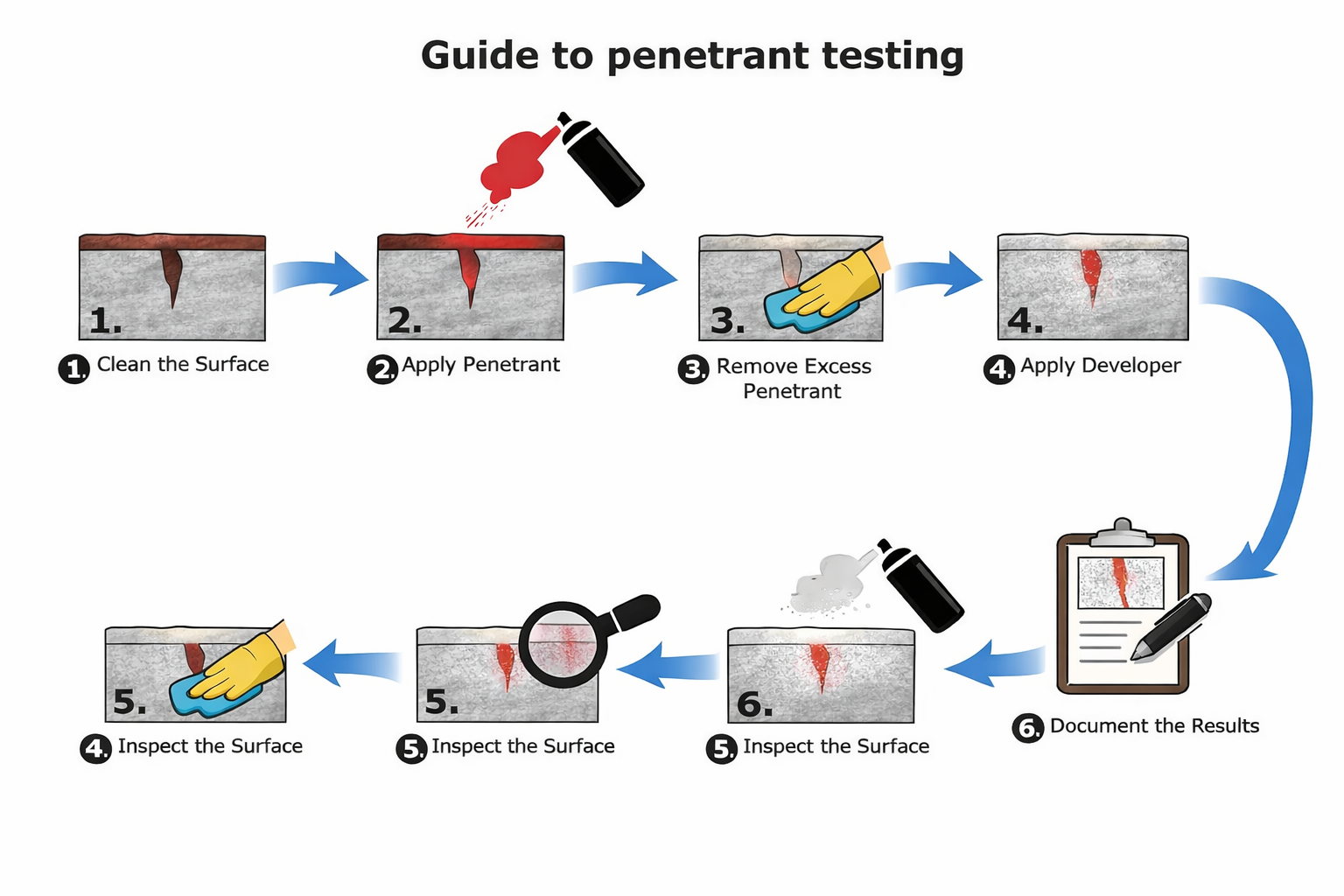
How LPI works
A reliable method for detecting surface-breaking defects on non-porous materials. Penetrant is applied to enter discontinuities, followed by controlled removal and developer application to reveal indications under visible or UV-A inspection.
Process consistency & standards
Designed in accordance with ASTM E1417 and aligned with NADCAP requirements, supporting process consistency, inspection sensitivity, and audit-ready performance.
Next Step
Explore equipment
Explore representative penetrant inspection equipment systems for water washable and post-emulsifiable workflows.